













.png.webp)


































Annabel Karmel’s Top Tips: Weaning Made Simple
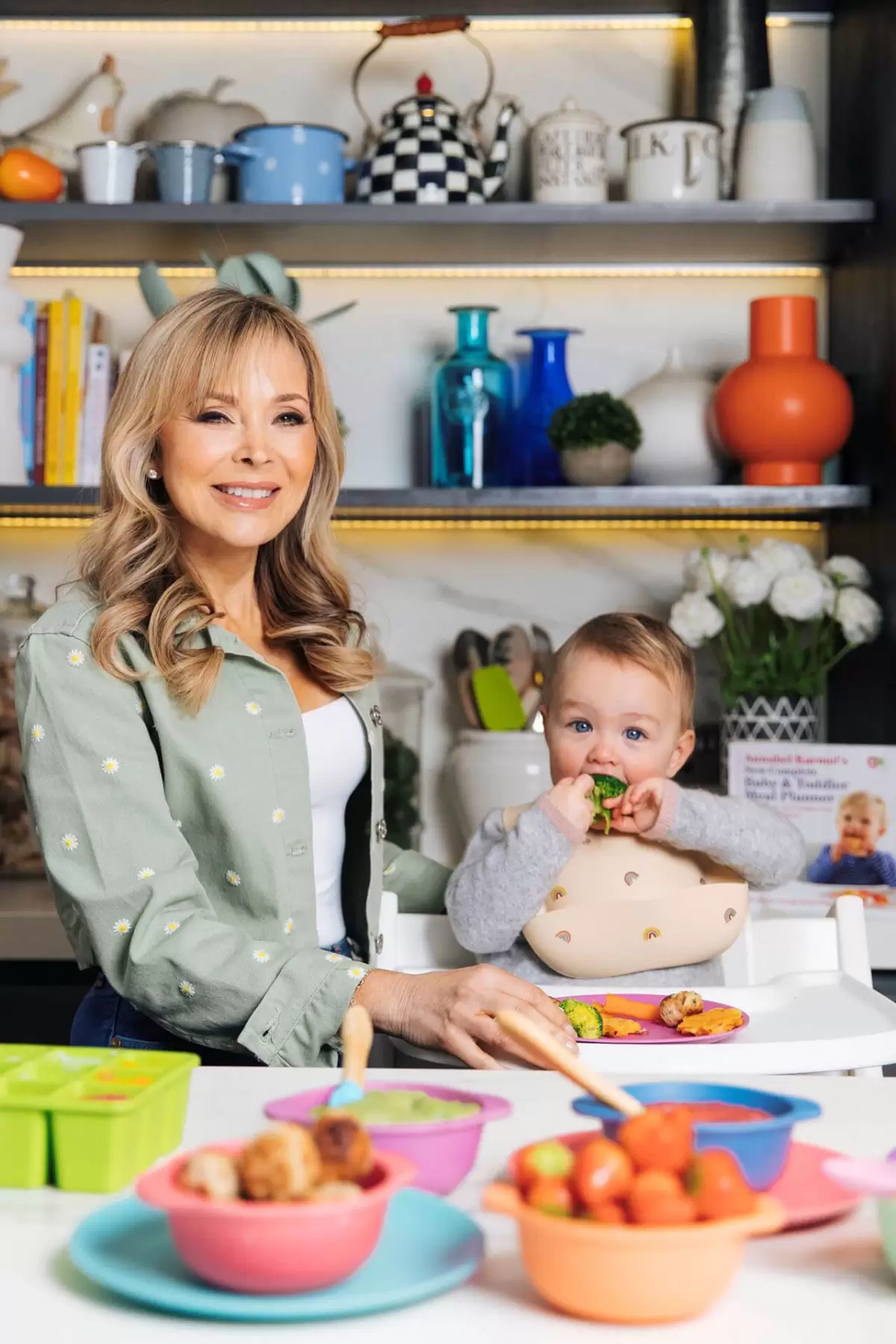
Baby-led weaning ideas from leading baby & children’s cookery author Annabel Karmel will help get you and your baby off to a flying foodie start! Whether you’re just starting out or looking for fresh inspiration, her expert tips make mealtimes exciting, stress-free, and full of delicious discoveries for your little one.
Baby-Led Weaning Ideas Blog Overview:
Is my baby ready to wean?
Every baby will develop at their own pace, but the World Health Organisation advise starting at ‘around six months.’ Knowing the signs to look out for will certainly help you to decide if your baby is ready to start weaning.
Ask yourself these key questions:
- Can they sit easily in a highchair and hold their head in a stable position?
- Has their tongue-thrust reflex disappeared? Put simply, is your baby able to swallow food? Those that aren’t yet ready will push their food back out.
- Have they developed sufficient hand-to-eye coordination? Your baby needs to be able to coordinate food and direct it into their mouth all by themselves.
Milk is still very much on the menu!
When you start to introduce solid food, it’s about introducing a variety of new tastes and textures rather than volume of foods that contribute nutrients and calories (not just yet anyway!) So, it’s important to remember that around 500-700ml of breast milk or formula milk will still be needed each day up until their first birthday.


Baby-led weaning or spoon-fed? You don’t have to choose
While lots of parents have success with spoon-led or baby-led weaning alone, many families like to combine the two. Giving purées when your baby is ready for first foods (particularly if slightly earlier than six months), with the introduction of finger foods and family meals from around six months is a fantastic option. This is also advocated by the likes of the Department of Health and Social Care. Instead of committing to a certain feeding method, it’s always best to remain flexible. If you follow your intuition and your baby's developmental signs you can’t go far wrong!
First tastes
Variety is key so offer your baby a wide variety of single first foods so that they can identify the foods they are eating.
Remember that babies are born with a sweet tooth as they are exposed to breast or formula milk first, which contains naturally sweet tasting lactose. Still offer those sweet root veg such as carrot and butternut squash and fruit as first foods but you will also need to ensure you are offering the bitter tasting vegetables during those early days too. Think broccoli, courgette, spinach and cauliflower!

Portion size guide
Did you know a baby’s stomach is approximately 10 x smaller than an adult’s at three months and by one year, around 4 x smaller? So, don’t put too much pressure on yourself when introducing your baby to their first ever taste of solids as they will only have very small amounts at first.
That may only be 2 – 3 teaspoons’ worth. In finger food terms, a small portion can be anything from 2 - 4 small batons of food. By the end of the first week, most babies will be eating 2 or 3 small portions a day. As a guide, your baby should generally be eating 3 small portions a day by the end of week two.
However, all babies develop at different rates so follow your baby’s lead – some might take more, and some less but both situations are completely fine!
Keep trying!
Did you know that it can take up to 15 attempts for your baby to accept certain foods or tastes, so be sure to give them plenty of chances to try again! It’s likely that your baby will pull funny faces and refuse certain foods on their first attempt.
Remember – those more bitter tasting veggies such as broccoli and spinach are a world apart from what they are familiar with, so it will take a little perseverance to get them accepting these flavours.
If your baby is showing signs of disliking a particular food, that’s ok. Leave it there and try again the next day or the day after.


Don’t delay in introducing critical nutrients
If you are starting to wean at six months, it’s important to introduce foods containing critical nutrients, like protein, iron and omega 3 essential fatty acids fairly quickly. Offer fruit and veg for the first couple of weeks and then start introducing protein-rich foods like red meat, eggs and lentils and oily fish such as salmon.
Iron-rich foods should be offered to your baby twice a day, or if your baby is vegetarian then at every mealtime (around three times a day). Did you know that vitamin C helps with iron absorption? So try to pair iron containing foods with a vitamin C rich food such as strawberries, mango, orange segments, red peppers, tomatoes, broccoli or leafy greens.
It’s important that Omega 3 essential fatty acids from oily fish like salmon should be offered twice a week.
Fantastic finger foods
From six months you can introduce soft finger foods to your baby – these are great for encouraging their independence, introducing texture and practicing that hand to eye coordination. They will need to be able to close their hand around the food so it’s best to start with pieces that are big enough for your baby to hold in their fist with some sticking out. Fairly long pieces (roughly 5–6cm) stand a better chance of being picked up. Try avocado wedges, banana ‘lollipops’, mango slices, steamed carrot batons and broccoli florets for starters!

Progressing through textures
It’s important to gradually introduce new textures from the very start of weaning as research shows that those who wait until their baby is over 10 months are more likely to develop an aversion to certain textured foods or become fussy in the future.
Finger foods are obviously a great way to get baby trying new textures. You can also gradually change the texture of purees by blending these slightly less, and then once they have got used to this, try mashing whilst ensuring the food is still fairly chunk-free. This gradual increase in texture will encourage your baby to adopt a more lateral tongue movement, which is another key learning step in mastering the art of eating. You can then start to let them explore the likes of rice, couscous, bulgur wheat and mini baby pasta shapes.


Introducing allergenic foods
The Department of Health and Social Care recommend that potential allergenic foods such as eggs or peanuts can be introduced from six months of age. In fact, for those babies who don’t have parents or siblings with allergies, or who don’t have early-onset eczema, start introducing allergenic foods in the same way you would with any other food. Giving these foods can help to desensitise babies. It is really important not to delay offering allergenic foods beyond 12 months of age as research suggests this may increase the likelihood of developing an allergy in the future (there is a critical window in being able to accept potential allergenic foods between four months to 12 months). If you are worried about allergies see your doctor to arrange a referral to a paediatric allergy specialist doctor.

Looking for mealtime inspiration for your baby or toddler? Annabel’s award-winning recipe app is home to over 1,000 simple and delicious ideas for the whole family, PLUS new recipes every week.
Packed with expert weaning support, including Annabel’s #1 listen-along guide, it’s a kitchen essential for happy, healthy mealtimes. Get your 1st month FREE with code ONEFINEBABY!
Safety is key when starting solids through baby-led weaning. Always sit your baby upright in a highchair, never leave them unattended while eating, and offer foods in baby-safe shapes (finger-sized pieces that are easy to hold). Avoid hard, round, or sticky foods like whole grapes, nuts, or raw carrots. Learn to tell the difference between gagging and choking — gagging is a normal reflex as babies learn to manage textures. You can boost confidence by taking a baby first aid course or watching certified videos from trusted Australian health organisations.
Iron is essential once your baby starts solids around six months, as natural stores begin to run low. For baby-led weaning, include soft, iron-rich foods such as shredded slow-cooked beef, flaked salmon, mashed lentils, eggs, and iron-fortified cereals mixed with breastmilk or formula. Pairing plant-based iron foods with vitamin C-rich fruits and veggies — like broccoli or strawberries — helps boost iron absorption. Offering a mix of flavours and textures also supports healthy eating habits from the start.
When your baby is around six months old and showing signs of readiness — such as sitting upright and reaching for food — you can begin baby-led weaning. Start by offering soft, finger-sized foods that are easy to hold and mash. Place a few pieces on their tray and let your baby explore them independently. Remember, it’s more about learning than eating at first, so expect lots of mess! Keep offering breastmilk or formula as the main source of nutrition while your baby adjusts to solids.
Yes, you can absolutely offer purées while doing baby-led weaning — in fact, many parents find that combining both methods works really well. This “mixed” or “combo” feeding approach lets your baby enjoy the best of both worlds: you can spoon-feed things like iron-fortified cereal, mashed veggies, or yoghurt, while also offering soft finger foods such as avocado slices, steamed carrots, or banana halves. Giving your baby a variety of textures helps them develop important chewing and swallowing skills, while ensuring they still get enough iron and nutrients. Most importantly, follow your baby’s lead — let them explore, eat at their own pace, and stop when they’ve had enough.
When your baby first starts baby-led weaning, it’s best to begin slowly with just one small solid meal a day — usually around six months — when they’re relaxed, happy, and not too tired or hungry. As your baby gets more comfortable with eating, you can gradually add a second meal between 7 and 9 months, then move to three meals and a few snacks by around their first birthday. At this stage, breastmilk or formula still provides most of their nutrition, so think of solids as a fun way for your baby to explore new tastes and textures. Every baby moves at their own pace, so go with their appetite and make mealtimes positive and pressure-free.