














.png.webp)


































Starting Solids: Annabel Karmel’s Handy First Foods Checklist
Baby-Led Weaning First Foods Blog Overview:
Iron-rich protein and omega 3s
Leading baby & children’s cookery author and food expert Annabel Karmel shares her handy baby-led weaning first foods with 50 nutritious foods for your baby!
Introducing solids to your baby is such an exciting milestone and an opportunity to really show your food explorer what tasty delights there are to try when it comes to the wonderful world of food.
Whether you are spoon-feeding or baby-led weaning the nutritious foods you’ll be offering will be the same. So, I’ve bought together the ultimate collection of power-packed first foods to explore with your baby. Let’s take a closer look!
Vegetables
Introduce a variety of vegetables – both sweet and bitter tasting to ensure your little one develops a palate for all tastes.
Babies are born with a preference for sweet flavours (as breastmilk and formula milk are sweet) so start with single sweet root veggies like carrot or sweet potato. But the trick is to also frequently introduce those ‘bitter’ tasting vegetables such as broccoli, spinach and cauliflower early on in those initial weaning weeks, and beyond!


Fruit
Once your baby has been busy getting stuck into lots of new vegetables you can start to introduce fruit. Whether it’s pureeing, mashing, or serving as soft finger foods, there are so many nutrient dense fruits for baby to sample.
Fruit is packed with vitamins and nutrients, and many pair well with vegetables so it’s time to get creating some tasty flavour combinations to further expand your baby’s palate.
Iron-rich protein and omega 3s
So you’ve mastered those first taste vegetables and fruits, it’s time to up that nutritional intake. From six months, offer foods containing iron-rich protein including red meat and poultry, beans and pulses as well as those omega 3 essential fatty acids – salmon being the cream of the crop!
As a guide you should be giving your baby iron-rich protein foods twice a day. If your baby is following a vegetarian diet they will need a slightly higher amount as plant-based sources are not so well absorbed by the body.
Did you know that vitamin C helps with iron absorption? Try to pair iron containing foods with a vitamin C rich food such as strawberries, mango, orange segments, red peppers, tomatoes, broccoli or leafy greens.
When it comes to brain development, those omega 3 essential fatty acids are super important. Your baby needs these specific fats for their health and development, and because they can’t produce essential fatty acids themselves, it is important they come from food.
Giving oily fish like salmon is a great way to pack in this critical nutrient so try and include oily fish in your baby’s diet twice a week.

At 7 months
By seven months, your baby will generally be eating three small meals a day alongside their usual milk. It can be helpful to try and make sure mealtimes are made up of three key nutritionals:
1. An iron-containing protein food
E.g. beef, chicken, fish, eggs, beans, pulses, tofu, fortified breakfast cereal with milk.
2. A vitamin C-rich food (to help your baby better absorb the iron part of their meal)
E.g. small portion of raspberries as dessert or a steamed broccoli floret as a side.
3. Energy-boosting foods – ideally a carbohydrate and a fat
E.g. baked sweet potato with unsalted butter, cooked pasta drizzled with olive oil, or smashed avocado on fingers of toast.
I know it seems like there is so much to think about and so many foods to cover! But, as long as you’re regularly giving new foods (paying extra attention to those nutrient-rich foods), you’re trying new textures and letting baby also explore foods for themselves, you’re well on the way to weaning success.
Download my Top 50 First Foods Checklist and have fun exploring new foods together!
Exclusive offer for One Fine Baby audience:
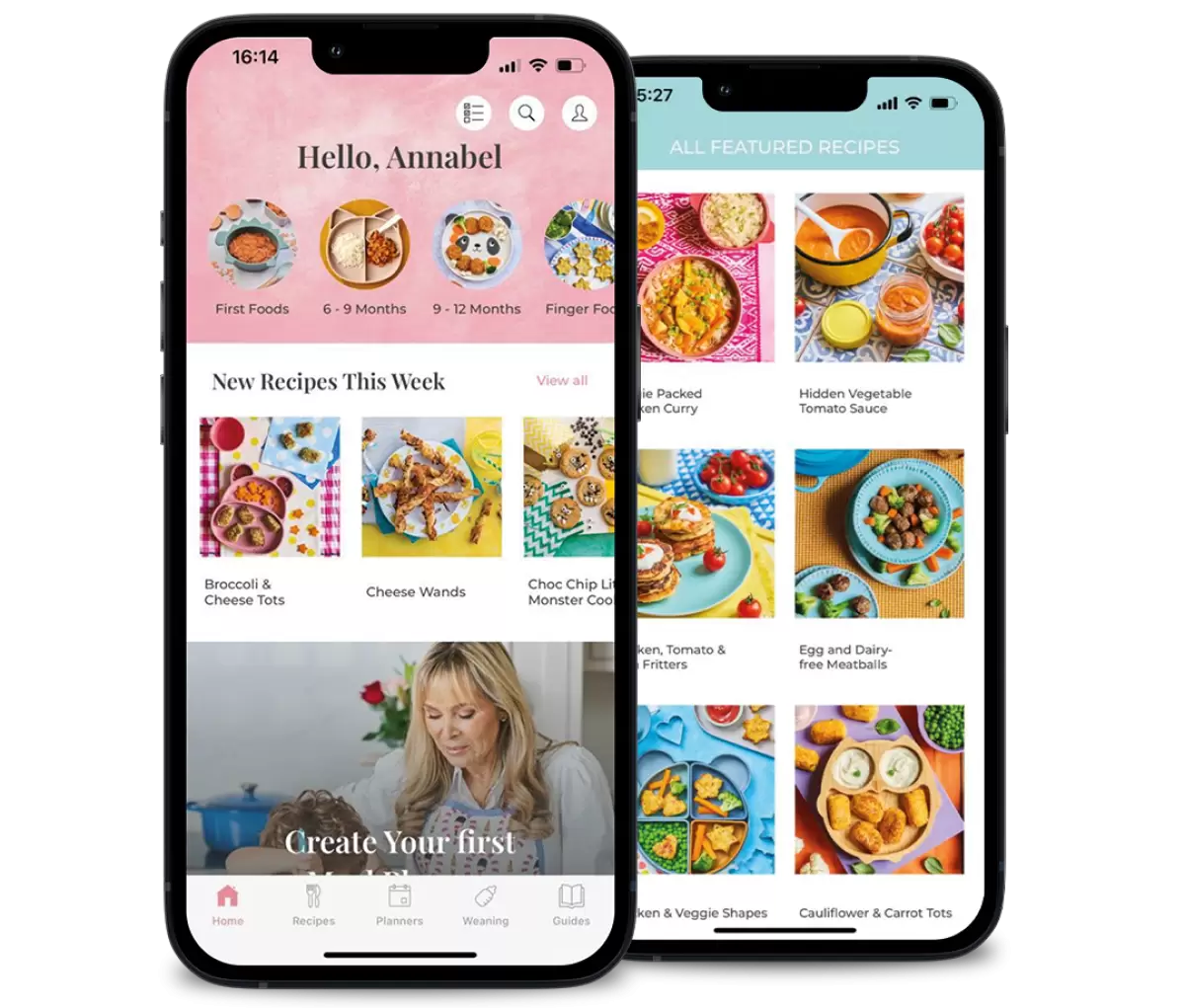
Looking for mealtime inspiration for your baby or toddler? Annabel’s award-winning recipe app is home to over 1,000 simple and delicious ideas for the whole family, PLUS new recipes every week.
Packed with expert weaning support, including Annabel’s #1 listen-along guide, it’s a kitchen essential for happy, healthy mealtimes. Get your 1st month FREE with code ONEFINEBABY
Baby-led weaning usually begins around 6 months of age, when your little one shows signs of being ready for solids. You’ll know they’re prepared if they can sit up with minimal support, have strong head and neck control, and seem interested in what you’re eating — like reaching for food or watching you closely at mealtimes. Readiness matters more than age, so follow your baby’s cues and check with your healthcare provider before introducing solid foods, particularly if your baby was premature or has special dietary needs.
Start with soft, easy-to-hold foods that mash easily between your fingers. Great first options include steamed carrot sticks, avocado slices, banana halves, roasted pumpkin, soft scrambled eggs, and strips of ripe pear. For iron, try offering shredded chicken, flaked salmon, or soft-cooked lentils. Make sure all foods are soft, cut into finger-sized pieces, and free from added salt, sugar, or honey.
Safety is key. Always stay with your baby during meals, serve foods in appropriate shapes and textures, and avoid choking hazards like whole grapes, nuts, raw apple slices, or tough meat. It’s also a great idea for parents to take a baby first-aid or choking-response course for peace of mind. Babies have a strong gag reflex, so occasional gagging is normal — it’s how they learn to manage food safely.
You can do a mix of both! Many families choose a “responsive feeding” approach — letting babies self-feed finger foods while also offering some purées or mashed foods by spoon if the baby shows interest. What matters most is allowing your baby to control how much they eat and to experience a variety of flavours and textures.
In the early stages, food is more about exploration than nutrition. Most of your baby’s calories still come from breastmilk or formula until about 9–12 months. You’ll know your baby is eating enough when they’re gaining weight steadily, have regular wet nappies, and seem happy and energetic. Follow their cues — babies are surprisingly good at regulating their own appetite.