













.png.webp)


































Signs That Labour Is Near… or Is It Just Gas?

Welcome to the final stretch of pregnancy, where every twinge, trip to the toilet, or midnight cleaning spree could have you asking, “Is this it??” If you're wondering how to know when labour is near, you’re not alone. Those final weeks can feel like an emotional rollercoaster, with every little symptom sparking hope (or confusion).
Whether you’re 37 weeks or inching past 40, the wait can feel endless - and those little changes in your body? It can be hard to tell the difference between signs and symptoms of labour and, well… indigestion. Confusing, exciting, and sometimes downright hilarious.
Not sure when your baby is due? Check out our pregnancy due date calculator to get accurate timing for your pregnancy journey.
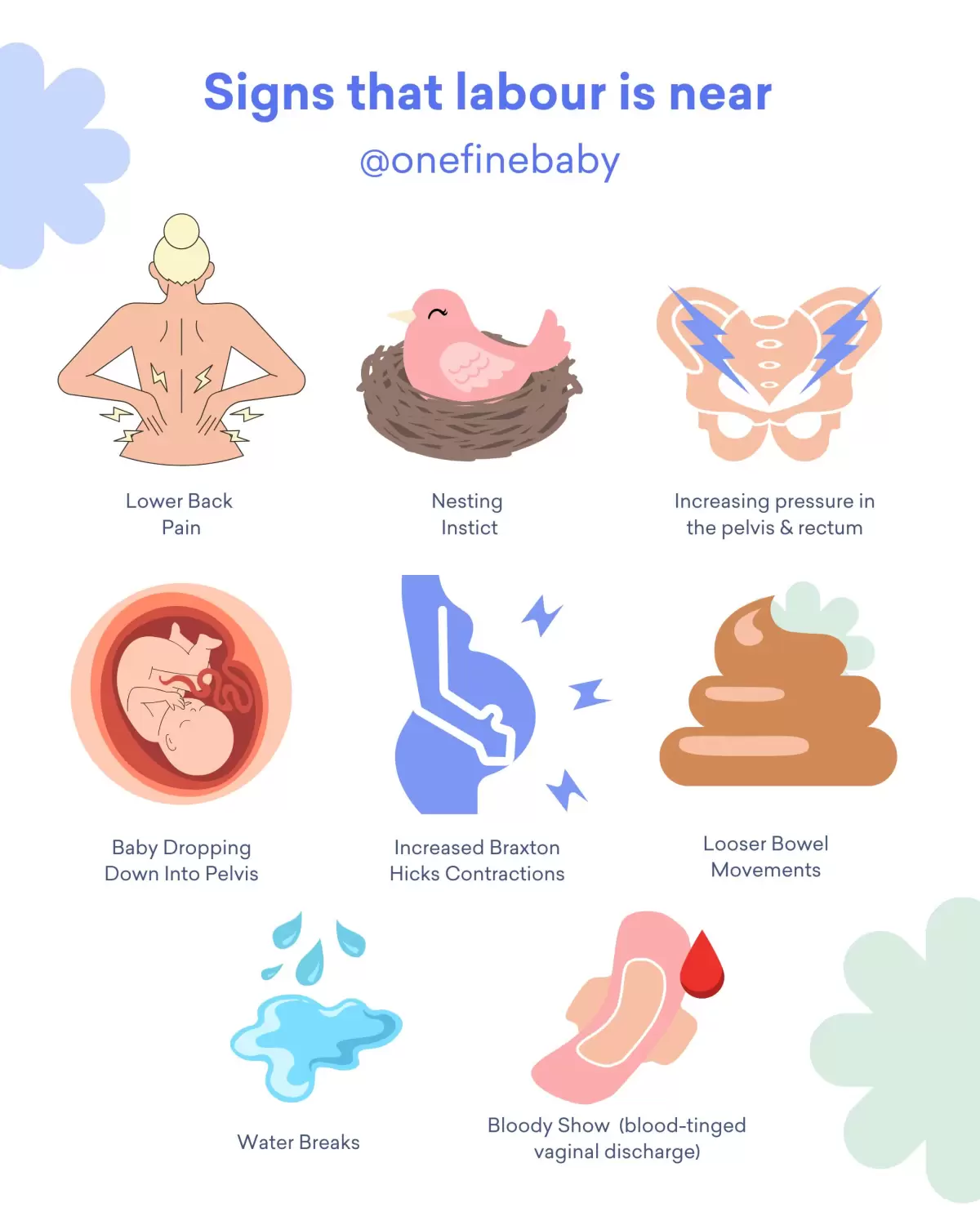
Here’s what could mean your baby is on the way:
Lightning Crotch (Yes, It’s a Thing)
Random Cramps, Pressure, Back Pain
Lightning Crotch (Yes, It’s a Thing)
That sudden zap of nerve pain in your pelvis or inner thigh? Totally normal. As baby settles into position, they may press on nerves and ligaments in some pretty uncomfortable ways. Unpleasant? Yes. But also one of the subtle signs of labour approaching.
Toilet = Your Second Home
If you’re running to the loo every 15 minutes (again), it could be baby moving lower into your pelvis, pressing on your bladder and bowels. Increased bowel movements (or a sudden urge to poo) are a sign your body is clearing the decks before labour begins. Glamorous? No. Useful? Definitely.
Nesting at Midnight
One minute you’re exhausted, the next you're reorganising your linen cupboard and scrubbing skirting boards like your life depends on it. This surge of energy is known as the nesting instinct - a primal urge to prep your space for baby’s arrival.
Random Cramps, Pressure, Back Pain
Everything feels… heavier. You might experience period-like cramps, lower backache, or a deep pelvic pressure. These could be a classic back pain labour sign, especially if paired with more frequent Braxton Hicks contractions, could mean labour is on its way.
A Little Gush (or a Big One)
Your waters breaking might be a Hollywood-style splash or just a subtle trickle. Either way, it’s time to call your care provider - especially if it’s clear and odourless (amniotic fluid) or has any greenish tint (meconium). Signs your water is about to break may also include a popping sensation or increased pelvic pressure beforehand.
”The “Bloody Show”
This is a small amount of blood-tinged mucus from your cervix as it begins to dilate. It’s messy, it’s normal, and it means your body is making moves. Another sign that labour might be just around the corner.
When to Go to the Hospital for Labour
So… when do you actually head in?
Here’s the general rule of thumb:
- Contractions are strong, lasting about 60 seconds, and coming every 3–5 minutes for at least an hour.
- Your waters have broken (especially if it’s green or foul-smelling).
- You’re experiencing bleeding, severe pain, or reduced fetal movement.
Knowing when to go to the hospital for labour can reduce stress and help ensure you arrive at the right time—not too early, not too late.
So… Is It Go Time?
Maybe. Maybe not quite yet. The truth is, these signs and symptoms of labour can show up hours—or even days—before active labour kicks in. Frustrating? Yes. But also: your body is working, mama. Every Braxton Hicks, every little cramp, every bathroom run- it’s all getting you closer to the big moment.
Labour isn’t always a clear-cut “start.” It’s a build-up - a wild, beautiful, slightly unpredictable journey that ends with your baby in your arms. So keep trusting your instincts, leaning on your support crew, and asking “Is this it??” as many times as you need.
Because soon? It really will be.
Looking for more real, honest baby prep?
Join us at the next One Fine Baby, Australia's favourite baby expo, follow us on socials, and check out our expert-backed blogs. From hospital bag checklists to birth support tips, we’ve got your back (and bump) every step of the way.
// Image by pch.vector on Freepik
True labour contractions follow a consistent pattern — they come at regular intervals, grow stronger, and get closer together as time passes. You’ll also notice that changing positions, resting, or walking won’t make them stop. These contractions often start in your lower back and move toward the front of your abdomen. False labour, or Braxton Hicks contractions, tend to be irregular and unpredictable. They may feel like mild tightening in your belly and often fade when you change positions, drink water, or relax. Think of them as your body’s way of “practising” for the real thing — uncomfortable but not quite the start of active labour.
Losing your mucus plug is one of those signs that your body is getting ready for labour — but it doesn’t always mean it’s happening right away. The mucus plug protects your baby during pregnancy by sealing the cervix, and as your body starts to prepare for birth, it naturally loosens and comes out. You might notice a thick or jelly-like discharge that’s clear, pink, or slightly streaked with blood. For some mums, labour can start within a few hours or days, while for others, it might still be a week or two away. It’s your body’s way of saying things are moving in the right direction — just not quite there yet. Keep an eye out for regular contractions or your water breaking, as those are clearer signs that labour is beginning.
When your water breaks, it means the amniotic sac — the protective bubble your baby has been growing in — has released its fluid. This might feel like a sudden gush or a gentle trickle that keeps coming. The fluid is usually clear or slightly pinkish and doesn’t have much of a smell. It’s one of the key signs that labour could start soon, though for some mums, contractions might take a few hours to begin. Once your water breaks, it’s important to call your healthcare provider or hospital for guidance. They’ll let you know what to do next and when to come in.
In the days or weeks leading up to labour, many mums notice both emotional and physical changes as their bodies prepare for birth. You might feel a mix of emotions — from sudden bursts of energy or “nesting” urges to restlessness or mood swings. Physically, your body may give subtle hints too, like increased pelvic pressure as your baby drops lower, more noticeable Braxton Hicks contractions, loose stools, or a feeling that your belly sits a bit lighter. These shifts are all signs that your body is getting ready to welcome your baby soon.
It’s a good idea to call your doctor or go to the hospital when your contractions are coming about every five minutes, lasting around a minute each, and have been steady for at least an hour — that’s usually a sign that labour has started. You should also reach out right away if your water breaks, you see any bleeding, your baby’s movements slow down, or you just feel like something isn’t right. Trust your instincts — it’s always okay to get checked for peace of mind.