













.png.webp)


































Boy parents: the work you’re doing now is changing the world, this is how

Caution: Trigger Warning. Themes of suicide.
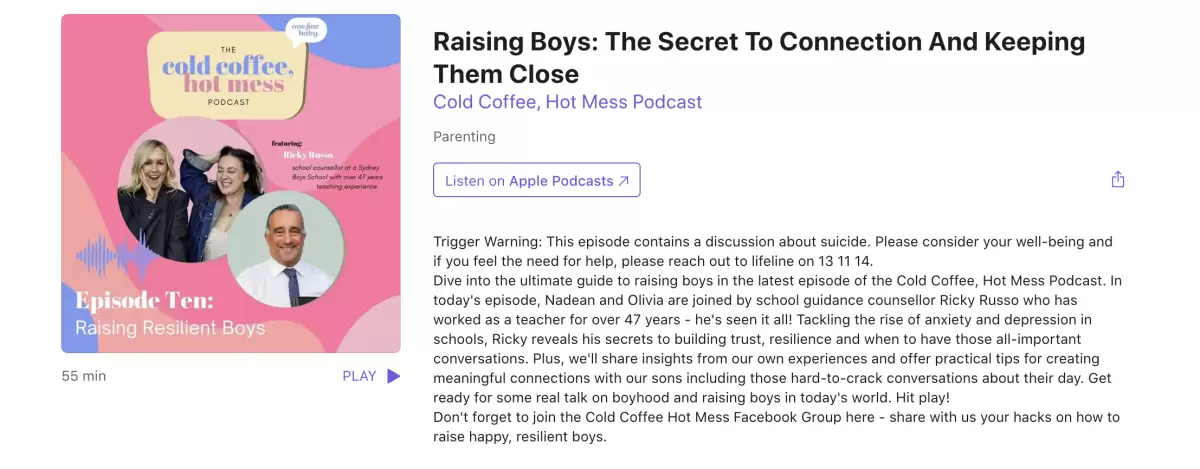
On today’s episode of the Cold Coffee, Hot Mess podcast, Nadean and Olivia spoke to Ricky Russo, a guidance counselor in Sydney boys’ schools for over 30 years.
With a boy each to raise, the girls were particularly interested in the things they could do to raise good men, men that would improve the state of the world, be able to show kindness, resilience and be in touch with their emotions.
Ricky spoke at length about communication, and how to use trust as a foundation to encourage communication. He delivered hacks in the form of ways to effectively do this, and also touched on the importance of family values and the necessity for male role models they can look to.
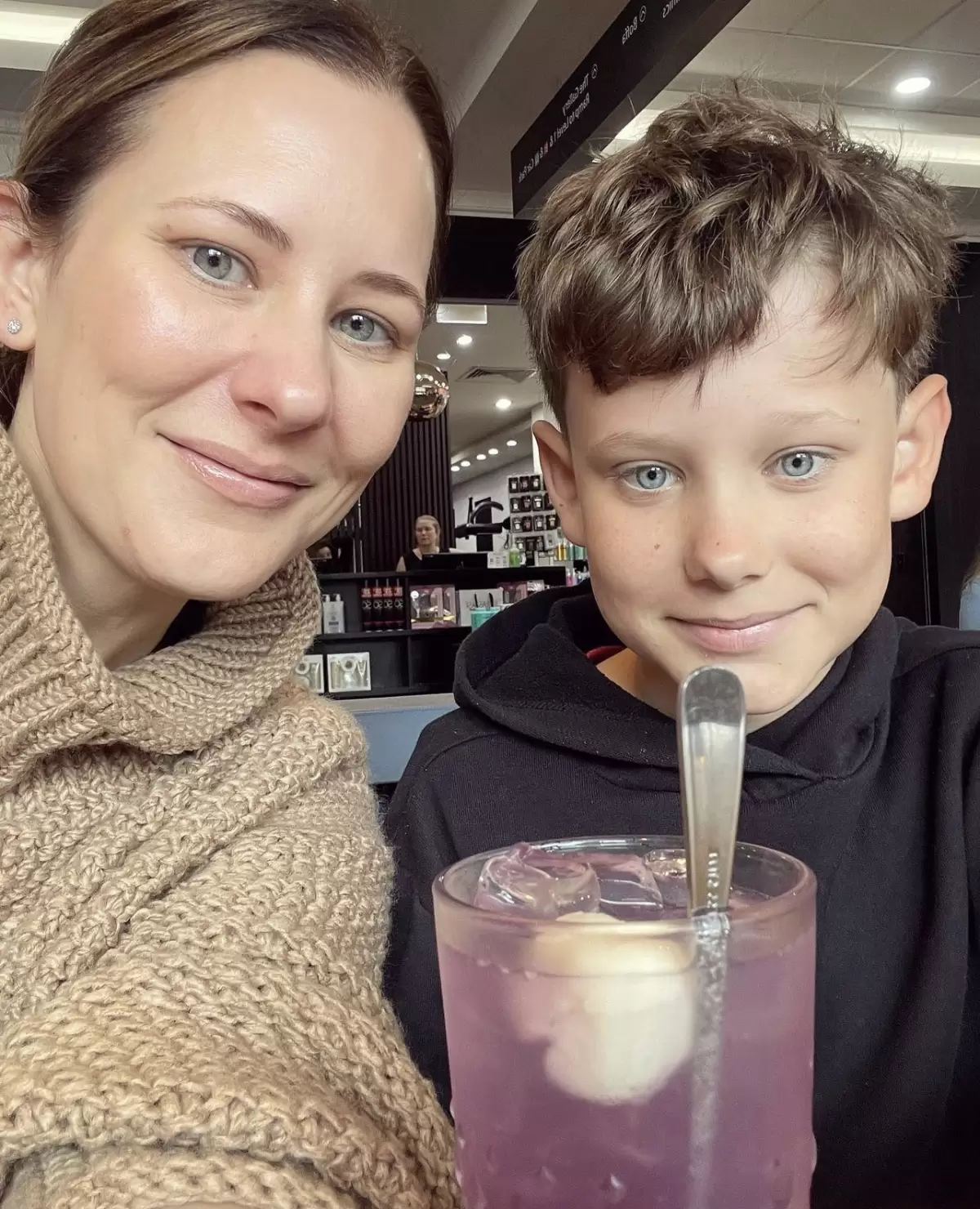
Robyn and her son Hugo
The vast difference between our children’s generation and our own, is most probably the availability of the father figure. Ricky described a direct correlation between boys who have a father around a lot of the time, and those without a strong male role model. He outlined the link as heavily dependent on the family situation, as most of the boys he speaks to will have factors going on outside of school, such as in the home, that lead to the issues they’re experiencing.
Ricky also touched on the rise in mental health issues and anxiety that he comes across from his students.
This is by no means a new problem, but we have a new level of insight that past generations just didn’t have, which means we can identify these issues sooner, and use the correct tools to provide help and support.
Boys these days are encouraged to cry, to air their grievances, to voice their worries, and it’s these things - that may not seem all that important - that is actually helping to change the world.
How, you ask?

Manori and her son Remy
With parents now more aware of the importance of a present and supportive family environment, and better armed with tactics to provoke communication, what we’re effectively doing is ensuring the future generation of men are more in touch with their emotions and feelings, and better prepared to face adversity. Simply said, they are longer encouraged to just ‘hold it in’, until they can no longer do that, and choose a path of violence or self harm.
If we can continue to do the parenting ground work now, in taking the steps to raise good men, who knows what could happen? Perhaps domestic violence will longer being the second biggest killer of women in Australia. Perhaps suicide will no longer be one of the leading causes of death in men aged 15-44.
The sky is the limit. Let’s keep up the good work, boy parents.
Be sure to check out our other blog, which focuses on parenting:
Instinctive Parenting Guide for New Parents
7 Steps to More Effective Parenting
Want to listen to the whole Cold Coffee, Hot Mess Podcast episode? Just click the button below.
Building confidence starts with connection, encouragement, and emotional validation. Let your son know it’s okay to express feelings — whether it’s sadness, frustration, or joy. Instead of saying “be tough,” teach him that strength includes being kind, empathetic, and self-aware. Celebrate effort over results, and let him see that mistakes are part of learning. Boys thrive when they feel loved for who they are, not just for what they achieve.
Every child has their own unique way of learning, so it’s important to follow your son’s natural interests instead of sticking to just one teaching style. If he enjoys activities like building, painting, or exploring outside, use those moments as opportunities to teach new concepts. Encourage curiosity by asking open-ended questions such as, “What do you think might happen if we do this?” — This kind of conversation boosts creativity and critical thinking. Try to maintain a healthy mix of structured lessons and free play, since many boys learn best through doing rather than listening. The goal is to nurture his love of learning, not to put pressure on achievement.
Boys often experience strong emotions but may not always know how to express them. Help your son name his feelings — for example, “I can see you’re angry because your toy broke.” Teach calming tools like deep breathing, drawing, or taking a short break to cool down. Lead by example: show him how you handle stress or disappointment in healthy ways. Over time, this emotional coaching helps boys develop self-control, empathy, and resilience.
Positive male role models — whether it’s a father, uncle, coach, or teacher — play a huge part in showing boys what healthy masculinity looks like. They teach values like respect, integrity, and empathy through everyday actions. However, mothers and other caregivers are just as vital; boys benefit most from a balance of warmth, structure, and guidance from both male and female influences. What matters most is being a consistent, loving presence in his life.
Encouraging independence helps boys build confidence and problem-solving skills. Start small — let him make age-appropriate choices like picking his clothes or packing his school bag. As he grows, teach him responsibility by involving him in chores and decision-making. At the same time, keep communication open so he feels comfortable coming to you for help or advice. Boys who feel trusted and supported are more likely to make smart, safe choices on their own.